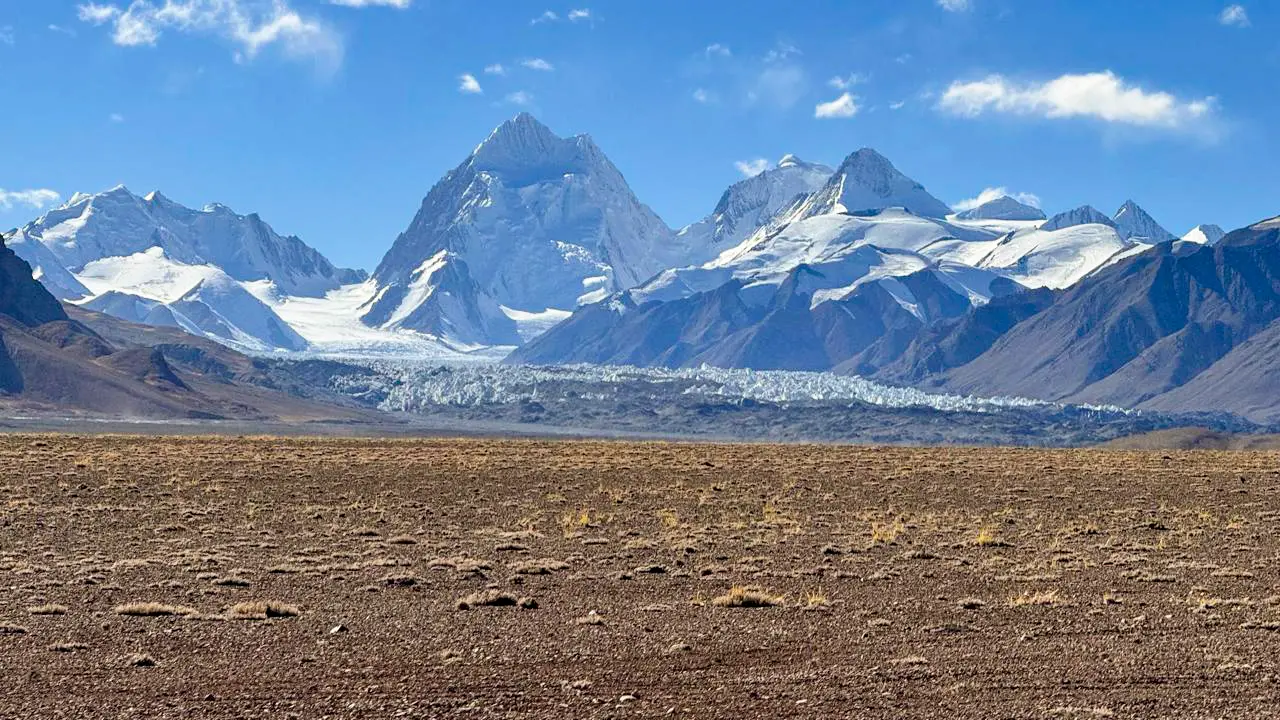
Apsarasas Kangri (7,245 metres / 23,770 feet) is one of the highest mountains in the Siachen Muztagh, a sub-range of the mighty Karakoram Mountains. Located deep within the remote Siachen Glacier region of Ladakh, this magnificent peak rises above endless glaciers, towering ice walls, and snow-covered ridges, making it one of the most spectacular and least explored mountains in the Indian Himalayas.
The mountain is admired by mountaineers for its impressive elevation, technical climbing routes, and untouched wilderness. Its remote location, harsh weather, and challenging terrain have made Apsarasas Kangri one of the rarest expedition objectives in the Karakoram.
Today, Apsarasas Kangri is not open for regular commercial expeditions because it lies within the highly restricted Siachen Glacier region. Although climbing activities are currently restricted, the mountain continues to inspire climbers, explorers, and mountain enthusiasts as one of India's hidden Himalayan giants.
Apsarasas Kangri is one of the principal peaks of the Siachen Muztagh, a remote mountain group within the eastern Karakoram. Standing at 7,245 metres (23,770 feet) above sea level, it ranks among the highest mountains in the Indian Karakoram. The mountain overlooks the upper Siachen Glacier and is surrounded by enormous glaciers, rugged granite faces, steep snow slopes, and vast ice fields.
The name "Apsarasas" was given by explorer Grant Peterkin during the 1908 Workman Expedition. It is derived from the Sanskrit word Apsara, meaning heavenly maiden or celestial fairy, giving the mountain the poetic meaning "Place of the Fairies."
Because of its isolated location and difficult access, Apsarasas Kangri remains one of the least visited major peaks in the Himalayas. Its untouched environment and dramatic alpine scenery make it one of the hidden treasures of the Karakoram.
Apsarasas Kangri occupies an important place in Himalayan mountaineering history. The first successful ascent of Apsarasas was made on 7 August 1976 by a Japanese expedition from the Osaka University Mountaineering Club. The summit team consisted of Yoshio Inagaki, Katsuhisa Yabuta, and Takamasa Miyomoto, who climbed via the West Ridge.
The mountain was climbed again by an Indian Army expedition in 1980, followed by another successful Indian Army ascent in 1988. However, the eastern summits of the Apsarasas group remain among the highest unclimbed peaks in the Karakoram.
Today, Apsarasas Kangri remains one of the most respected and least explored expedition peaks in the Indian Himalayas.
Apsarasas Kangri is located in the Siachen Muztagh of the eastern Karakoram Mountains in Ladakh. The mountain stands close to the upper Siachen Glacier near India's northern frontier.
The nearest major town is Leh, although the mountain itself lies inside a highly restricted military zone where civilian access is not permitted.
Apsarasas Kangri rises above one of the most spectacular glacier systems in the world. The surrounding landscape is dominated by vast glaciers, snow-covered peaks, steep ridges, and untouched alpine wilderness.
Nearby geographical features include:
This region remains one of the most remote and pristine mountain environments in the Himalayas.
Apsarasas Kangri lies within the highly sensitive Siachen Glacier region, where access is strictly controlled.
Important Information
Travellers visiting Ladakh can enjoy views of the Karakoram Mountains from accessible destinations such as Nubra Valley and nearby high-altitude passes.
Apsarasas Kangri is one of the hidden jewels of the Indian Karakoram. Rising above the vast glaciers of the Siachen Muztagh, it represents the perfect combination of altitude, wilderness, and mountaineering history. Its poetic name, dramatic alpine scenery, and remote location make it one of the most fascinating mountains in Ladakh.
Although very few climbers have ever stood on its summit, Apsarasas Kangri continues to inspire mountaineers, explorers, and mountain lovers from around the world. Its untouched landscape, technical challenges, and legendary status make it one of the finest high-altitude peaks in the Indian Himalayas.
| Elevation | 7,245 m (23,770 ft) |
| Mountain Range | Siachen Muztagh |
| Mountain System | Karakoram |
| Region | Ladakh, India |
| Nearby Glacier | Siachen Glacier |
| Latitude | 35.4700° N |
| Longitude | 77.0900° E |
| Difficulty | 0 |
| Climbing Status | Closed for Commercial Expeditions |