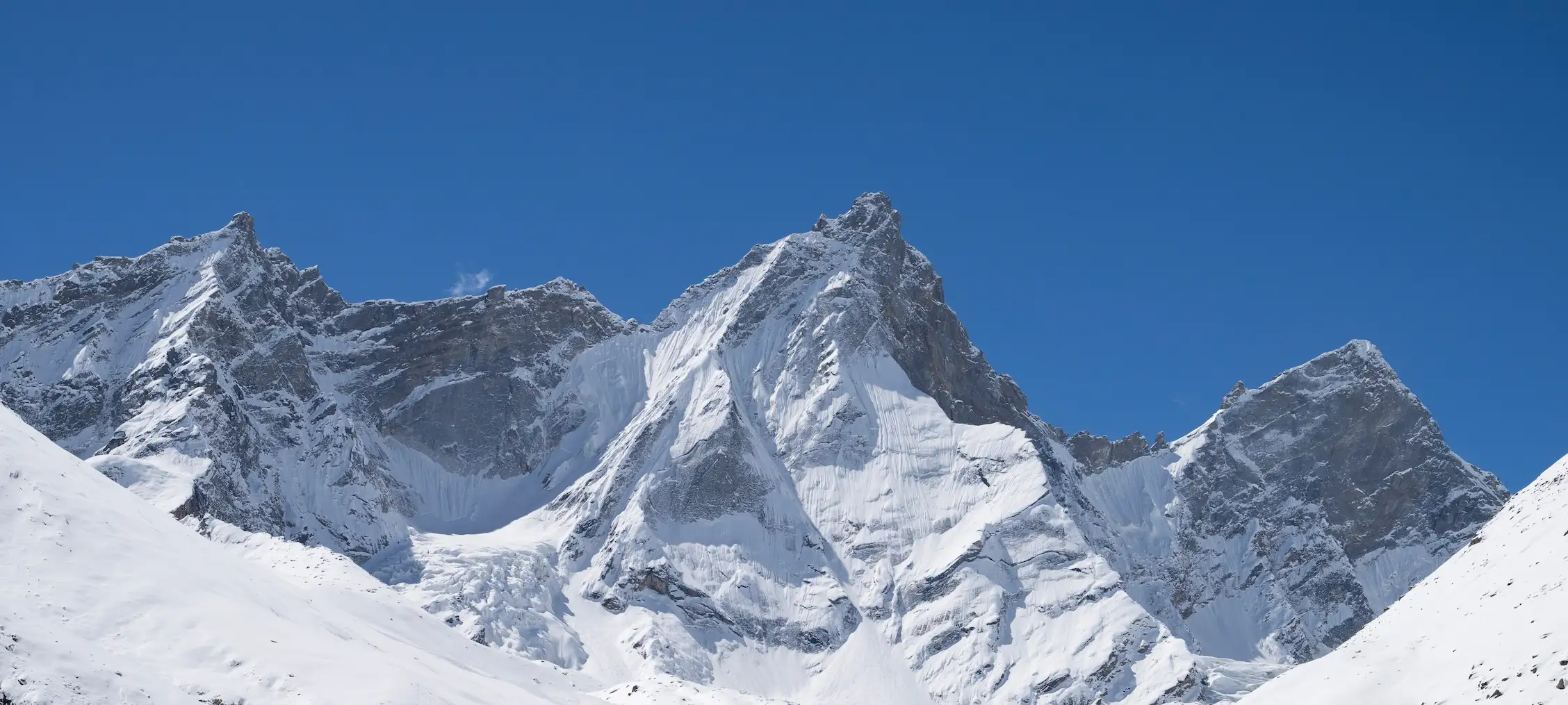
Singhi Kangri (7,202 metres / 23,629 feet) is one of the highest mountains in the Siachen Muztagh, a sub-range of the mighty Karakoram Mountains. Located near the upper Siachen Glacier on the border between India and China, this magnificent peak rises above vast glaciers, steep snow slopes, and rugged alpine ridges, making it one of the most remote mountains in the Indian Himalayas.
Singhi Kangri is admired by mountaineers for its impressive elevation, technical climbing routes, and untouched wilderness. The mountain is surrounded by permanent snowfields, massive glaciers, and dramatic ice walls, offering a classic high-altitude Karakoram landscape. Its isolated location and difficult access have made it one of the least visited 7,000-metre peaks in the region.
Today, Singhi Kangri is not open for regular commercial expeditions because it lies within the highly restricted Siachen Glacier region. Although climbing is currently not permitted, the mountain remains an important landmark in the history of Himalayan exploration and mountaineering.
Singhi Kangri is one of the major peaks of the Siachen Muztagh, located within the eastern Karakoram Mountain System. Standing at 7,202 metres (23,629 feet) above sea level, the mountain overlooks the upper Siachen Glacier and is surrounded by rugged granite walls, steep snow ridges, and vast glacial terrain.
Because of its remote border location, Singhi Kangri has remained largely untouched by modern mountaineering. The mountain represents the true spirit of Himalayan wilderness, where nature remains wild, pristine, and unspoiled.
Its dramatic landscape, permanent snow cover, and challenging terrain make Singhi Kangri one of the hidden gems of the Indian Karakoram.
Singhi Kangri has an important place in Karakoram mountaineering history. The first successful ascent was made in 1976 by a Japanese expedition led by Haruo Sato. The climbers approached the mountain from the north through the Shaksgam Valley and successfully reached the summit after overcoming difficult snow and ice terrain.
In 2006, an Indian Army Karakoram Expedition attempted a new route from the south via the Siachen Glacier. Although the team established high camps and made significant progress, severe weather and dangerous snow conditions prevented a successful summit.
Today, Singhi Kangri remains one of the rarest expedition objectives in the Karakoram because civilian access to the region is highly restricted.
Singhi Kangri is located in the Siachen Muztagh of the eastern Karakoram Mountains, near the upper Siachen Glacier on the India–China border. It stands in one of the most remote and strategically important mountain regions of the Himalayas.
The nearest major town is Leh, although the mountain itself lies inside a highly restricted military region where civilian access is not permitted.
Singhi Kangri rises above one of the world's largest non-polar glacier systems. The surrounding landscape is dominated by towering snow-covered peaks, glaciers, steep ridges, and rugged alpine valleys.
Nearby geographical features include:
The region remains one of the least explored mountain environments in the world.
Singhi Kangri lies within the highly sensitive Siachen Glacier region, where access is strictly controlled.
Important Information
Travellers exploring Ladakh can enjoy distant views of the Karakoram Mountains from selected locations in the Nubra Valley.
Singhi Kangri is one of the hidden giants of the Indian Karakoram. Rising above the vast glaciers of the Siachen Muztagh, it represents the perfect combination of altitude, isolation, and untouched wilderness. Its dramatic snow-covered summit, remarkable climbing history, and remote setting make it one of the most fascinating mountains in Ladakh.
Although very few people will ever stand beneath its towering slopes, Singhi Kangri continues to inspire mountaineers, explorers, and mountain enthusiasts around the world. Its pristine alpine environment, legendary reputation, and spectacular Karakoram scenery make it one of the finest high-altitude peaks in the Indian Himalayas.
| Elevation | 7,202 m (23,629 ft) |
| Mountain Range | Siachen Muztagh |
| Mountain System | Karakoram |
| Region | Ladakh, India |
| Nearby Glacier | Siachen Glacier |
| Parent Peak | Teram Kangri III |
| Latitude | 35.6000° N |
| Longitude | 76.9800° E |
| Difficulty | 0 |
| Climbing Status | Closed for Commercial Expeditions |