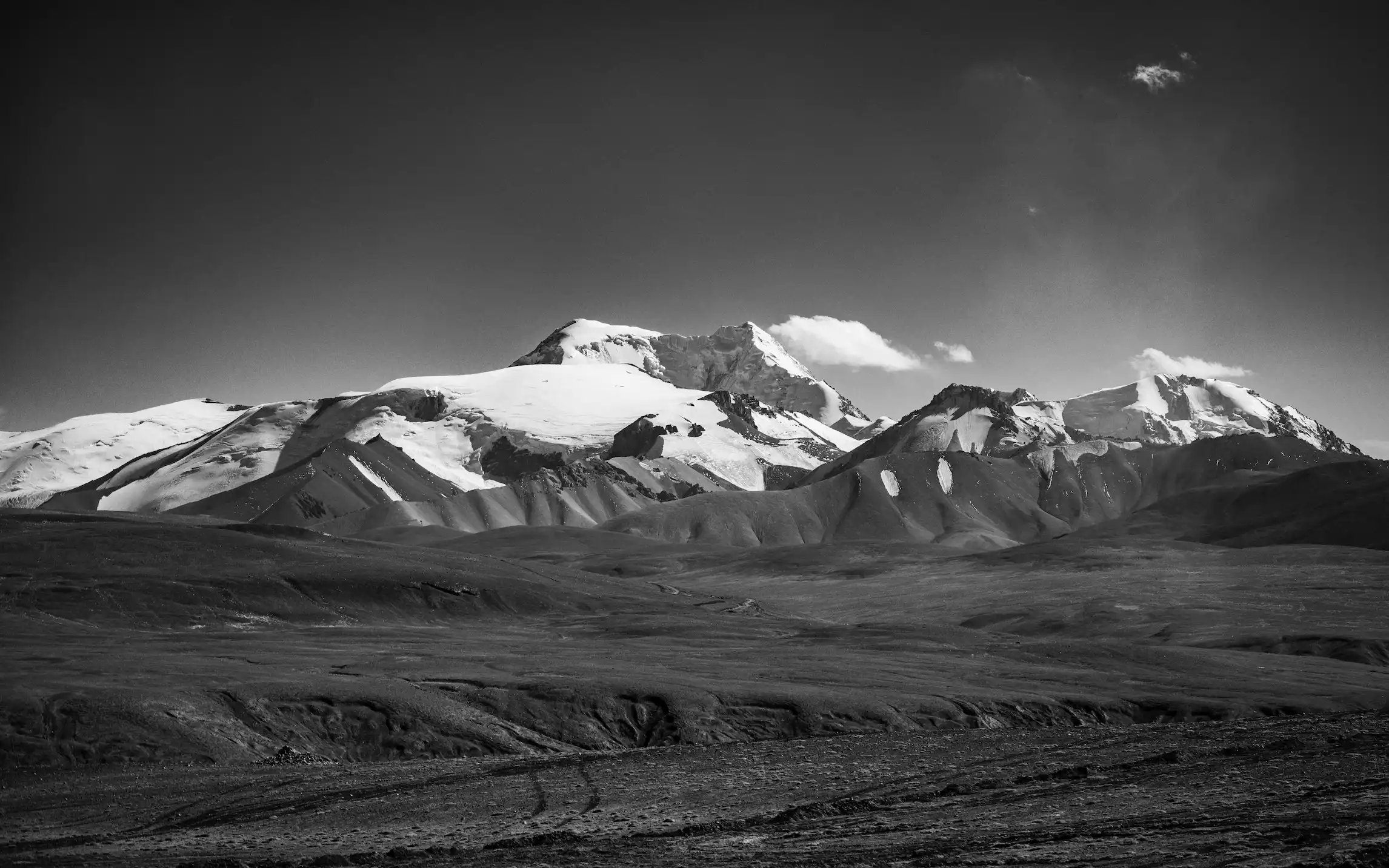
Explore mountain climbing in Ladakh with detailed information on climbing seasons, famous peaks, expedition planning, permits, equipment, costs, acclimatization, and safety.
Mountain climbing in Ladakh offers some of India's most rewarding high-altitude adventures, ranging from beginner-friendly 6,000-metre trekking peaks to challenging Himalayan expeditions above 7,000 metres. Surrounded by the Karakoram, Zanskar, and Ladakh ranges, the region provides excellent climbing opportunities for both first-time mountaineers and experienced alpinists. This guide explains how mountain climbing works in Ladakh, the best peaks to climb, the ideal climbing season, permits, equipment, costs, safety tips, and everything you need to plan a successful expedition.
Mountain climbing in Ladakh is popular because the region offers a unique combination of accessible peaks, high-altitude landscapes, reliable weather, and a wide range of climbing opportunities for both beginners and experienced mountaineers. Many peaks are approachable with minimal technical gear, making them perfect entry points for those starting their mountaineering career.
Air connectivity to Leh (the main hub) is excellent, with flights from major Indian cities. From Leh, many base camps are just a day's drive or short trek away—far easier than remote areas in other parts of the Himalaya. The weather is generally friendly during the climbing season: dry with less rain than the monsoon-hit Greater Himalayas, though high winds and cold nights are common.
There are thousands of unnamed peaks offering endless exploration opportunities, alongside well-known trekking peaks like Stok Kangri (currently closed due to environmental concerns) that are great for novices. Permits are more straightforward and affordable compared to Nepal or other Indian Himalayan regions. For experts, the eastern Karakoram offers countless technical challenges above 7,000m. Overall, Ladakh combines accessibility, diversity, and raw wilderness like few places do.
Mountain Climbing in Ladakh has a rich legacy tied to exploration and discovery. European explorers began venturing into the region in the mid-19th century, drawn by the formidable Karakoram and Zanskar ranges.
| Period | Milestone |
|---|---|
| 1850–1860 | British survey teams and travelers first explored the Ladakh-Karakoram area. |
| 1887 | British explorer Martin Conway conducted significant explorations. |
| 1909 | Italian mountaineer Luigi Amedeo led a major Karakoram expedition. |
| 1930–1949 | European teams targeted remote Zanskar and eastern Ladakh peaks. |
One of the most iconic early successes was the first ascent of Kun Peak (7,077m) in August 1913 by Italian climber Mario Piacenza, along with Lorenzo Borelli and Indian climber Ali Rahim from kargil ladakh. The nearby Nun Peak (7,135m) was first climbed on August 28, 1953, by a French-Swiss team; Pierre Vittoz and Claude Kogan reached the summit.
The establishment of the Indian Mountaineering Foundation (IMF) in 1960 boosted organized expeditions. Government support in the 1970s–80s popularized peaks like Stok Kangri, Kang Yatse, and Nun-Kun. By the 1990s, Ladakh had become one of India's premier destinations, attracting climbers worldwide. Today, it continues to see both commercial expeditions and exploratory first ascents.
Leh, the capital of Ladakh, sits at around 3,500m. Climbers should spend at least 2 days here acclimatizing before heading higher. The climate is extremely dry due to the rain shadow effect—monsoons rarely reach this far. Summers bring daytime highs of +20°C to +28°C, while winters plunge to -10°C to -25°C (or lower at altitude). Global warming has brought more unpredictable weather, including occasional heavy rains and flash floods.
Ladakh lies between the Karakoram Range to the north and the Greater Himalaya to the south, with high plateaus in the east reaching 4,000–4,900m—ideal for approaching 6,000m peaks.
| River | Description |
|---|---|
| Indus River | The lifeline of Ladakh, originating in Tibet, flowing through deep gorges and supporting settlements and agriculture in the main valley. |
| Zanskar River | Famous for its dramatic frozen Chadar Trek in winter; it cuts through the Zanskar Range with powerful rapids in summer. |
| Shyok River | A major tributary of the Indus, known for its braided channels and proximity to Nubra Valley. |
| Suru River | Flows through the Suru Valley near the Nun-Kun massif, fed by glaciers. |
| Mushkoh River | Runs through the remote Mushkoh Valley through Drass towards kargil to Pakistan, known for its scenic beauty and wildlife. |
| Valley | Description |
|---|---|
| Nubra Valley | "Valley of Flowers," famous for sand dunes, Bactrian camels, Diskit Monastery and samstanling monastery. |
| Suru Valley | Gateway to Nun-Kun, lush in parts with dramatic peaks. |
| Mushkoh Valley | Remote and less visited, offering wild landscapes. |
| Indus Valley | The heart of Ladakh, home to Leh and many monasteries. |
| Sham Valley | Lower and more fertile, with ancient villages and rock art. |
| Zanskar Valley | Deep, isolated, famous for monasteries and the world famous Chadar Trek expedition. |
| Hanu Valley | Known for Dha-Hanu villages with unique Brokpa culture, there physique and dress up. |
| Lake | Description |
|---|---|
| Pangong Tso | World's highest saltwater lake, famous for its changing blue hues and Line of Actual Control location. |
| Tso Moriri | Pristine freshwater lake in Rupshu, known for rich biodiversity and famous site with rich birdlife. |
| Tso Kar | "White Lake," known for salt deposits and wetlands and famous for migrated bird and birding photography. |
| Yayatso | A beautiful high-altitude lake in Ladakh's Changthang region at 4,820 metres. It is known as the "Birds' Paradise" and was declared Ladakh's first Biodiversity Heritage Site in 2023. |
| Yarab Tso | A sacred high-altitude "Hidden Lake" in Nubra Valley, Ladakh, near Panamik/Trisha village. Located at around 14,100–15,000 ft, it is revered for its crystal-clear waters and serene surroundings, offering a short scenic hike. |
| Kyun Tso | Smaller high-altitude lakes scattered across the Changthang plateau, offering serene beauty and wildlife habitats. |
| Ordong Tso | A pristine high-altitude alpine lake in the Changthang region of Ladakh, situated at around 5,300 metres. It is one of the lesser-known hidden lakes near Yashu Tso, ideal for trekking and offering stunning glacial views in a remote, untouched landscape. |
| Yashu Tso (Yusup Tso) | A beautiful high-altitude glacial lake in Ladakh's Changthang plateau at around 5,300 metres. Located near Ordong Tso, it is a remote, pristine hidden gem perfect for adventurous trekkers seeking untouched alpine scenery. |
| Merpal Tso | A remote high-altitude lake in the Changthang region of Ladakh, located en route from Chushul towards Nyoma, just before Kaksang La Pass. Situated at over 4,900–5,300 metres, it is a pristine, lesser-visited gem offering breathtaking views amid rugged mountains. |
| Reyul Tso | Ryul Tso (also known as Kyun Tso) is one of the remote twin high-altitude lakes in the Changthang region of Ladakh, near Nyoma. Situated at a very high elevation, it offers pristine waters and dramatic wilderness scenery, ideal for adventurous offbeat explorers. |
| Kyagar Tso | A small high-altitude brackish lake in the Rupshu Valley of Ladakh, near Tso Moriri, at about 4,705 metres. Surrounded by mountains, it is a serene, less-visited spot known for its clear waters and rugged beauty. |
| Tso Marpo | (Red Lake) is a stunning high-altitude lake in the Photoksar region of Ladakh (Zanskar area), at around 5,070 metres. Its distinctive reddish waters, surrounded by dramatic mountains, make it a unique and least-visited gem, popular among trekkers on the Red and Blue Lakes route. |
(sparse but resilient cold-desert ecosystem)
Wildlife: Snow Leopard, Pallas cat, Sand fox, Eurasian Lynx, Himalayan brown bear, Bearded Vulture, Himalayan Griffon, Himalayan Bazzard, Eurasian Eagle owl, Eurasian little owl, Tibetan Wolf, Himalayan Ibex, Blue Sheep (Bharal), Kiang (Tibetan Wild Ass), Ladakh Urial, Argali, Marmot, Pika, Black-necked Crane, wild yak (Dong), Tibetan antelope, Tibetan Goa antelope, Himalayan vessel, Stone Martin, Golden Eagle etc.
Vegetation: Sea Buckthorn (Hippophae rhamnoides), Wild Rhubarb (Rheum australe), Ephedra (Ephedra gerardiana), Himalayan Thyme (Thymus linearis), Caraway (Carum carvi), Artemisia species, Saussurea species (Snow Lotus relatives), Astragalus species (diverse genus), Carex sedges and Poa grasses, Potentilla species, Edelweiss-like alpine herbs, Caperbush (Capparis spinosa), Wild Allium species (garlic/onions), Dactylorhiza hatagirea, Podophyllum hexandrum, Aconitum species, Gentiana species, Lagotis species, Picrorhiza kurroa, Mentha longifolia, Arnebia euchroma, Willows and Poplars (wild forms), Cushion plants (Thylacospermum, etc.), Various alpine forbs and grasses.
| Pass | Description |
|---|---|
| Khardung La | Third world's highest motorable roads (~5,359m), gateway to Nubra. |
| Chang La | High pass (~5,360m) on the route to Pangong Tso. |
| Taglang La | On the Leh-Manali highway (~5,328m). |
| Zoji La | Connects Ladakh to Kashmir Valley (~3,528m, prone to closures). |
| Mig La | One of the highest motorable passes (~5,913m / 19,400 ft), currently among the world's highest. |
| Umling La | World's second-highest motorable pass (~5,799m / 19,024 ft), in the Demchok sector. |
| Martse Mig La (Marsimik La) | Extremely high pass (~5,590m), one of the challenging routes in eastern Ladakh. |
| Tulum Putila | High pass from Nubra to chongthass in the remote mountain regions of Ladakh. |
| Saser La | High pass (~5,411m) leading towards the Shyok River and Karakoram areas. |
| Wari La (Warila) | High pass (~5,312m / 17,428 ft) on alternate routes. |
| Fotu La | Highest point on the Srinagar-Leh highway (~4,108m), known for steep gradients. |
| Chorbat La | Connects Ladakh to Baltistan region (~4,950m approx.). |
| Umbala (Umba La) | High pass in the Zanskar or adjacent areas. |
| Singay La (Singhe La) | High pass in the Zanskar range, part of trekking routes. |
| Shinku La (Shinkun La) | High pass (~5,091m) connecting Zanskar to Lahaul. |
| Morang La | Remote high pass in eastern Ladakh. |
| Parang La | One of the highest trekking pass between ladakh and Himachal. |
Ladakh is truly the Land of High Passes with dozens more challenging ones.
Ladakh has numerous 7,000m+ and 6,000m+ peaks.
| 7,000m+ Peaks | 6,000m+ Peaks |
|---|---|
| Apsarases Kangri | Mount Gia |
| Chong Kumdan | Chamser and Kungser Kangri |
| Ghent Kangri | Stok Kangri |
| K12 Peak | Chakula Kangri |
| Nun Peak | Lobuche Kangri |
| Mamostong Kangri | Mentok Kangri |
| Kun Peak | Chalung Kangri |
| Padmanabh Kangri | Kang Yatse |
| Rimo Kangri | Dzojongo |
| Saltoro Kangri | Tsomothang |
| Saser Kangri | Mount Chilling |
| Singhi Kangri | Pinnacle |
| Teram Kangri | UT Kangri |
| Tughmo Zarpo | Shakya Kangri |
These notable peaks are not only historically significant with recorded first ascents but also remain accessible for climbers today, offering rewarding experiences for both seasoned mountaineers and adventurous trekkers.
| Peak | Elevation | First Ascent Details |
|---|---|---|
| Nun Peak | 7,135m | First climbed on 28 August 1953 by Pierre Vittoz and Claude Kogan (French-Swiss expedition). |
| Kun Peak | 7,077m | First climbed in August 1913 by Mario Piacenza, Lorenzo Borelli, and Ali Rahim. |
| Saser Kangri (Main Peak) | 7,672m | First ascended on 21 August 1973 by an Indian Army expedition led by Col. N. Kumar. |
| Kang Yatse II | 6,400m | First climbed in the 1990s (popular technical peak; multiple teams since). |
| Mentok Kangri | 6,270m | First climbed on 11 September 2002 by a British expedition (led by Chris Bonington's associates). |
| Chamser Kangri | 6,665m | First ascended in 1995 by an Indo-French expedition. |
| Lungser Kangri | 6,666m | First climbed in 1994 by a Japanese expedition. |
| Kyagar Ri | — | First modern ascent in the early 2000s by exploratory teams. |
| Chakula | — | First ascent recorded in the 2011 by Altitude adventure team. |
| Kamju Kangri | — | First climbed in the early 2000s by international expeditions. |
| UT Kangri | — | Ascended by Indian mountaineers in the 2010s. |
| Tsomothang | — | First ascents in the 2007 by Altitude adventure. |
| Yalung Nong | — | First climbed during expeditions in the 2000s. |
| Gyamari | — | Ascended by teams in the 1990s–2000s. |
| Polo Kunka Kangri | — | First ascent in the 2020s by Altitude Adventure during covid pendamic. |
| Kakset Kangri | — | Modern ascents recorded in recent decades. |
| Shyaka Kangri | — | Climbed by expeditions in the 2010s. |
| Z1 & Z2 | — | Technical first ascents in the 2000s. |
| Pinnacle Kangri | — | First climbed in the 1990s. |
| Mount Chilling | — | First ascent in the 1980s–90s by early Ladakh expeditions. |
| Chalung Kangri | — | Ascended in the 2000s by various teams. |
These peaks offer everything from straightforward snow slopes to technical routes.
Choosing the right time for mountaineering in Ladakh is crucial for safety, success, and enjoyment. The region's extreme high-altitude environment means weather, snow conditions, avalanche risk and accessibility change dramatically throughout the year.
The prime Ladakh climbing season runs from early June to early October. June marks the opening of most roads and passes after winter snowmelt, though early in the month you may still encounter lingering snow on higher routes. July and August offer the most stable weather — longer daylight hours, generally clearer skies, and firmer snow conditions for climbing. September brings crisp air, excellent visibility, and fewer crowds, making it many climbers' favorite month, though nights get significantly colder and some higher camps may see fresh snowfall. By early October, most expeditions wrap up as temperatures drop sharply and passes risk closure.
During this summer window, full-fledged expeditions to major peaks like Nun, Kun, Kang Yatse, Mentok Kangri, and Saser Kangri are possible. The dry climate (Ladakh lies in the rain shadow) means less precipitation than the rest of the Himalaya, but afternoon winds and sudden storms can still appear, especially above 6,000m.
Winter Mountaineering in Ladakh (November to March) is a completely different game and is gaining popularity among experienced climbers. While most big peaks remain out of reach due to extreme cold (often below -25°C at altitude) and heavy snow, several accessible, non-technical or moderately technical peaks are climbed in winter. Popular winter objectives include Kyagar Ri, UT Kangri, Mentok Kangri, Gyama Ri, Yalungnong, and Kang Yatse II (KY2).
These winter climbs are chosen because of relatively easier road access from Leh, lower avalanche risk on certain routes, and non-technical terrain that allows focus on endurance, cold-weather skills, and mental toughness. Many professional climbers use these expeditions as high-altitude training and acclimatization for future 7,000m or 8,000m peaks. Winter climbing also offers incredible solitude and a totally different Himalayan experience — frozen landscapes, dramatic light, and the satisfaction of pushing limits in harsh conditions. However, it demands superior fitness, proper cold-weather gear, and experienced guides.
No matter the season, proper acclimatization in Leh (at least 2–3 days) is non-negotiable. Always monitor weather forecasts closely and build flexibility into your itinerary. Our team at Altitude Adventure carefully plans expeditions according to the latest conditions to maximize safety and summit chances.
Mountaineering in Ladakh is as much about technical ability and mental preparedness as it is about physical fitness. Whether you are a beginner aiming for a trekking peak or an experienced climber targeting technical routes, mastering the following skills is essential:
We recommend formal training (basic and advanced mountaineering courses from IMF or recognized institutes) before attempting serious peaks.
Having the right gear can mean the difference between a successful summit and turning back. Here is a comprehensive checklist with short explanations:
| Equipment | Purpose |
|---|---|
| Ice Axe | For balance, self-arrest, and cutting steps on snow/ice. |
| Crampons | Essential for gripping hard snow and ice slopes. |
| Helmet | Protects against rockfall and icefall. |
| Harness | Core piece for roped climbing and rescue. |
| Gaiters | Keep snow and debris out of boots. |
| Ropes (Static & Dynamic) | For fixed lines and belaying. |
| Ascender & Descender | For efficient movement on fixed ropes. |
| Carabiners (Screwgate & Non-screwgate) | Multiple for anchors and clipping. |
| Snow Bars / Deadman Anchors | For secure snow protection. |
| Avalanche Transceiver (Beacon), Probe & Shovel | Critical for winter or high-risk snow travel. |
| Walkie-Talkies / Satellite Phone | Reliable communication where mobile networks fail. |
| Gamow Bag / Portable Altitude Chamber | Life-saving in case of severe AMS. |
| Tents (4-season) | Must withstand high winds and heavy snow. |
| Climbing Boots & Camp Shoes | Double boots for extreme cold; lighter shoes for base camp. |
| GPS, Altimeter Watch, Compass & Route Maps | Navigation redundancy. |
| Prusik Loops, Slings & Belay Devices | For safety systems. |
| Rock Pitons & Friends | For mixed rock-and-ice routes. |
| Sleeping Bag (down to -20°C or lower) | Sleeping Mat & Inflatable Pillow. |
| Headlamp with Extra Batteries | Trekking Poles, and Personal First-Aid Kit. |
We provide high-quality rental equipment in Leh for most technical items so you don't have to carry everything from home. Our team inspects all gear before departure.
| Category | Requirements |
|---|---|
| Foreigners | Valid passport/visa, travel insurance, IMF (Indian mountaineering foundation) climbing permit, local authority permits, indemnity forms and emergency contacts. |
| Indians | Aadhaar, medical certificate, IMF (Indian mountaineering foundation) climbing permit, insurance, local authority permits, indemnity forms and emergency contacts. |
Altitude Adventure will arrange all the necessary permission and permits which simplify the process.
The cost of a mountaineering expedition in Ladakh depends on the peak, duration, group size, and level of service. Prices vary because different mountains require different numbers of days, porters, and permits. Here is a transparent breakdown of typical expenses (per person, in INR, approximate 2026 rates):
| Item | Estimated Cost (Per Person) | Notes |
|---|---|---|
| Accommodation (Leh + camps) | ₹3,000 – 8,000 per day | Hotels in Leh + high-altitude tented camps |
| Transportation | ₹15,000 – 50,000+ | May vary according to distance / size of group |
| Equipment Rental | ₹200 – 600 per day | Ice axe, crampons, boots, sleeping bag, down jacket, harness, etc. |
| Porters / Ponies | ₹1,000 – 3,000 per day | Number depends on expedition length and load |
| Porters' Insurance | ₹3,000 (full expedition) | Mandatory coverage |
| Camping Fees & Staff | ₹400 – 500 per day (camping) | Ground fees + support staff |
| High-Altitude Chef & Kitchen Staff | ₹2,000 – 4,000 per day | Essential for good nutrition at altitude |
| Guide / Liaison Officer Fees | ₹5,000 – 8,000 | Experienced local guides |
| Permits & Miscellaneous | ₹8,000 – 25,000 | IMF, local authorities, environmental fees |
A typical 10–12 day expedition to a 6,000m peak for a small group usually falls between ₹1,25,000 to ₹2,80,000 per person (all-inclusive). Longer or more technical climbs (e.g., Nun or Kun) cost more. We offer transparent, customized quotes with no hidden charges. Group discounts are available. Contact us for a detailed proposal tailored to your chosen peak.
Ladakh's fragile cold-desert ecosystem needs protection. At Altitude Adventure, sustainable practices are at the heart of every expedition:
By choosing responsible operators, you help preserve Ladakh for future generations of climbers.
With experienced local guides (check our best mountaineering guide in Ladakh page and team profiles like Mingmar Tendi Sherpa), we prioritize safety, sustainability, and authentic experiences. From Nun Peak to custom expeditions, our team handles logistics so you focus on the climb. Learn more in Our Story and Why Choose Us.
Ready to summit? Explore our Mountaineering Packages or Customize Your Expedition.